
How this page was reviewed
Written and reviewed by the Postraid editorial team. We compared the linked source page with the provider information and dated tables shown here. This is editorial guidance, not a hands-on product test unless the page explicitly says otherwise. Last updated .

The short version
Show the work a client could ask you to make, explain your role honestly and make the next conversation simple.
A portfolio answers a production question
A potential client wants to understand whether you can turn a brief into a useful finished asset. Your portfolio should help them see the kind of content you make, the audience you understand and the work you personally contributed. A follower count or an energetic introduction does not answer those questions on its own.
Keep content production separate from audience distribution. A project might involve producing an asset for the brand, publishing to your own account, licensing an existing clip or a combination of those services. Explain which kind of work each example represents. This avoids a conversation in which the client assumes that a production fee includes access to your audience or unlimited advertising use.
Choose a focused first collection
Start with three strong examples that demonstrate different communication jobs. One might explain a product action, another answer a buying objection and a third teach a short process. Treat three as a practical starting point, not a rule that prevents you from including a fourth example when it adds something genuinely different.
Pick a clear audience or product category for the first collection. If you want to work with productivity apps, show that you can make an interface understandable and explain a use case without a long technical introduction. If you want to work with household products, demonstrate handling, scale and a practical task. Range is useful when the reason for each example is clear.
Make self-initiated work without inventing a client
You can create a sample project using a product you already own or a service you can accurately demonstrate. Label it as a self-initiated concept, not a paid campaign. Do not imply that the brand commissioned, approved or used the asset. A simple note beside the clip can explain the hypothetical brief and your role.
Only describe experiences you actually had. An illustrative product explanation does not need a fictional claim that you used something for months or achieved a result. If you include a scripted scenario, make its nature clear. Keep the sample honest enough that you would be comfortable explaining every line to a prospective client.
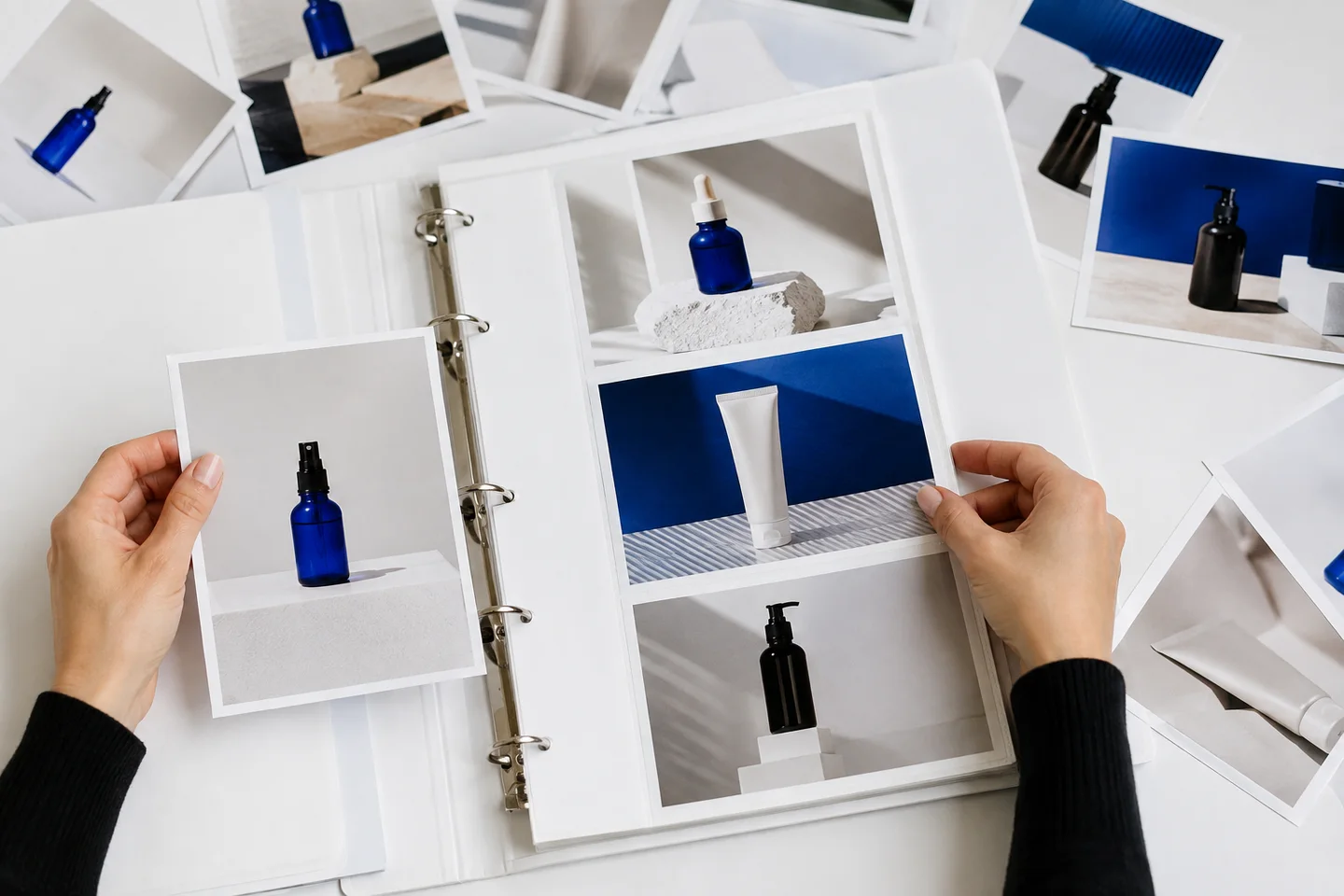
A worked three-video portfolio
Imagine a creator building a portfolio around everyday organization products. The first sample demonstrates a reusable packing checklist: the opening names a familiar forgotten item, the middle shows the checklist being reused and the final frame shows the completed list. The brief is to make the product action understandable, not to claim that the app guarantees a stress-free trip.
The second sample answers a practical question about a storage pouch, such as which items fit inside. It uses an accurate close-up and a simple size comparison. The third teaches a short preparation routine using products the creator already owns. Together, the samples demonstrate explanation, objection handling and instruction. Each is marked as a concept, with no invented client outcome.
Film for comprehension before adding polish
Plan the product moment before recording the opening. Write down the shots needed to support the message, prepare sample data for software demonstrations and check the background for private information. Stable framing and clear audio are more useful than effects that distract from the action. Make a short test recording before committing to several full takes.
Keep portfolio video in a 9:16 frame for the vertical placements described here. Check captions at phone size and keep essential details away from interface overlays. Watch once without sound to see whether the basic message survives, then listen with sound for awkward edits. There is no universal clip duration that guarantees interest; use enough time to complete the idea without repeating it.
Show a variation with a reason
Two openings for the same demonstration can reveal how you think about creative choices. For the checklist example, one opening might name the forgotten item while another begins with the finished packing list. Keep the rest of the sample stable and explain the difference in intent. This shows a controllable decision rather than a pile of loosely related edits.
Do not label an untested variant as the winner. If you have no performance evidence, call it an alternate opening and describe the question it would test. If a client later shares results that you are allowed to publish, include the observation window, relevant context and your actual contribution rather than claiming the entire campaign outcome.
Arrange the page around the examples
Put a strong, relevant sample near the top with a short line about your specialty. Follow it with the remaining examples and concise notes about the brief, intended audience and your contribution. A client should not have to read a long biography before discovering what you can produce.
Use descriptive labels rather than a gallery of unexplained thumbnails. A title such as Product demonstration: reusable checklist tells the reviewer more than Project 03. Group different categories when your collection grows. Keep the navigation simple enough that someone can return to a specific example after discussing it with a teammate.
Make the portfolio easy to open and review
Use a page that works on a phone without requesting an account or forcing a large download. Test the public link in a signed-out window and on a slower connection. Provide a clear play control, captions where useful and a still image that gives context before playback. Avoid depending on audio autoplay to explain the work.
Check every contact link and make the next step explicit. Ask a prospective client to share the product, intended placements, deliverables and deadline. You do not need a complicated booking flow to start a useful conversation. Do not publish a personal address or information you do not want strangers to use; choose a professional contact destination you actually monitor.
Describe pricing through scope, not an invented market average
A public starting price can help a client understand fit, but only if it says what is included. Define the deliverable, approximate complexity, revision allowance and whether the price covers production only. If projects vary too much for a simple number, describe the information required for a quote instead of presenting a misleading flat rate.
Discuss usage duration, paid placements, raw footage, alternate edits, exclusivity and publishing services separately when they affect the agreement. This guide does not assert a universal creator rate or a standard percentage for rights. Build a quote from your time, costs, deliverables and the agreed use, and put the final scope in writing before starting the project.
Explain the working process
Add a short description of how a project moves from brief to delivery. For example: confirm the audience and claims, agree on a concept, record the required assets, deliver a draft, collect consolidated feedback and hand over the approved version. Make clear which steps depend on the client providing access, products or factual approval.
Describe revisions in terms a client can understand. Correcting a caption, changing the opening and recording an entirely new concept are different amounts of work. Agree on the feedback process and decision maker before production. A portfolio that explains the process helps the client imagine working with you, not just watching the finished clip.
Keep evidence and permissions honest
Use client names, logos and campaign results only when you have the necessary permission. If you collaborated with an editor, strategist or other creator, state your role. A finished asset can still be a strong example without implying that you personally did everything.
Avoid fabricated testimonials, unexplained revenue figures or claims that one clip caused an entire business result. A useful case note can describe a verified deliverable and the problem it addressed without a dramatic statistic. Revisit the portfolio when permission changes or a product demonstration becomes outdated.
Show judgment alongside AI-assisted work
If AI assisted a project, explain the contribution where it matters to understanding the work. The valuable question is whether you selected accurate product facts, shaped a coherent story, checked the result and delivered something appropriate for the brief. Do not use generated footage as evidence that a person purchased or experienced a product.
Postraid can support product-context reactions, memes and carousels within a broader content routine. It is not presented here as a custom voice-cloning or character-generation service. A portfolio should distinguish work you filmed, work you edited and illustrative assets you generated or licensed. That clarity helps a client choose the right production approach for the next brief.
Finish a small version before expanding it
Choose the audience, write three short briefs and produce the strongest sample first. Review it against the intended message before filming the others. Publish a simple page with clear labels, scope information and a working contact link, then ask someone unfamiliar with your work to explain what they think you offer.
Use that feedback to improve navigation and clarity. Replace weak examples when better ones exist instead of continually adding to an unfocused archive. The goal is not a portfolio that looks finished forever. It is a reliable, current introduction to the kind of work a client can confidently ask you to do.
A few useful answers.
What should I include in my first portfolio?
A small set of relevant finished examples, a concise specialty statement, an explanation of your contribution, scope or pricing guidance and a working contact link. Add client evidence only when it is accurate and approved for publication.
Can I build one before I have clients?
Yes. Create clearly labeled self-initiated concepts using products you can accurately demonstrate. Do not imply a brand hired you or approved the work, and do not invent a personal experience for a scripted sample.
How many videos do I need?
Three distinct examples are a manageable starting point. Add more only when they demonstrate another useful skill or audience fit. A reviewer should understand why each example is there.
Must I publish a fixed rate card?
Not necessarily. A well-defined starting price can be useful, but a scope-led quotation process may fit more complex work. In either case, explain what affects the price and what information a client should send.
Where should I host the page?
Use a public, mobile-friendly page that makes the work easy to play and the contact route easy to find. Test the link without your own logged-in session. The review experience matters more than a particular hosting brand.
How should AI-assisted examples be presented?
Explain your contribution accurately and distinguish generated or licensed assets from filmed product use. Show the creative decisions and checks you made without presenting illustrative content as an actual customer endorsement.