
How this page was reviewed
Written and reviewed by the Postraid editorial team. We compared the linked source page with the provider information and dated tables shown here. This is editorial guidance, not a hands-on product test unless the page explicitly says otherwise. Last updated .

The short version
A UGC creator is hired to produce content. Build evidence that you can explain a product clearly, then agree on the deliverables and usage before filming.
The job is production, not a follower count
In commercial use, a UGC creator makes customer-style assets that a brand can publish or use in an agreed campaign. The work may include research, a script, filming, editing, captions and delivery. Some creators also publish to their own audience, but that is an additional scope. A brand should know whether it is commissioning a file, a public endorsement, an audience placement or a combination.
You do not need to build a large following before learning product storytelling. You do need examples that show the kind of work you can deliver. A useful sample makes a product action understandable, gives the viewer a reason to care and reaches a clear ending. A beautifully edited personal feed may not demonstrate those skills if the product is never explained.
The label covers varied work. A hands-only demonstration, a screen recording with narration and a direct-to-camera explanation can all fit a commission. A testimonial is different because it communicates someone’s experience. Do not offer to invent that experience. If a brand needs evidence from a customer, it should obtain an accurate account from someone who actually has it.
Choose a starting subject you can demonstrate
Pick a product category you understand and can film with the equipment and access you have. A kitchen tool offers visible actions; an app may need a clear screen capture; a fabric product may need detail and movement. The choice is about credible execution, not a promise that one niche pays more or guarantees bookings.
List three recurring questions a buyer might have. For a fictional lunch container, those could be how the compartments fit a meal, how the lid closes and what fits in a bag. Choose one question per sample. Avoid broad claims such as “the best container ever” when the footage can instead show a useful, verifiable detail.
Check the product yourself before writing the script. Record what you can demonstrate and what you cannot establish. If the packaging makes a technical or regulated claim, ask the brand for its approved wording and evidence rather than extending it. Creative confidence should come from a clear observation, not from adding a bigger promise.
Make three samples with different purposes
The first sample can be a short demonstration. Show the initial situation, the product action and the result. The second can answer an objection, such as whether the container fits a particular everyday setup. The third can be a tutorial that helps an owner use a feature correctly. These are suggested exercises, not a required industry portfolio formula.
Write a simple shot list for each: opening view, detail, action and ending. Give the opening a specific job instead of adding a dramatic phrase unrelated to the product. “Here is how the lid locks” tells the viewer what they will learn. Keep the shot on that action long enough to see it, and avoid cutting around a step that did not work.
Label self-initiated samples clearly. Do not imply the brand hired you, approved the work or achieved results through it. Use products and material you are allowed to feature, keep private information out of recordings and be accurate about your own contribution. Three clear examples are more useful than a long reel where the viewer cannot identify what you did.
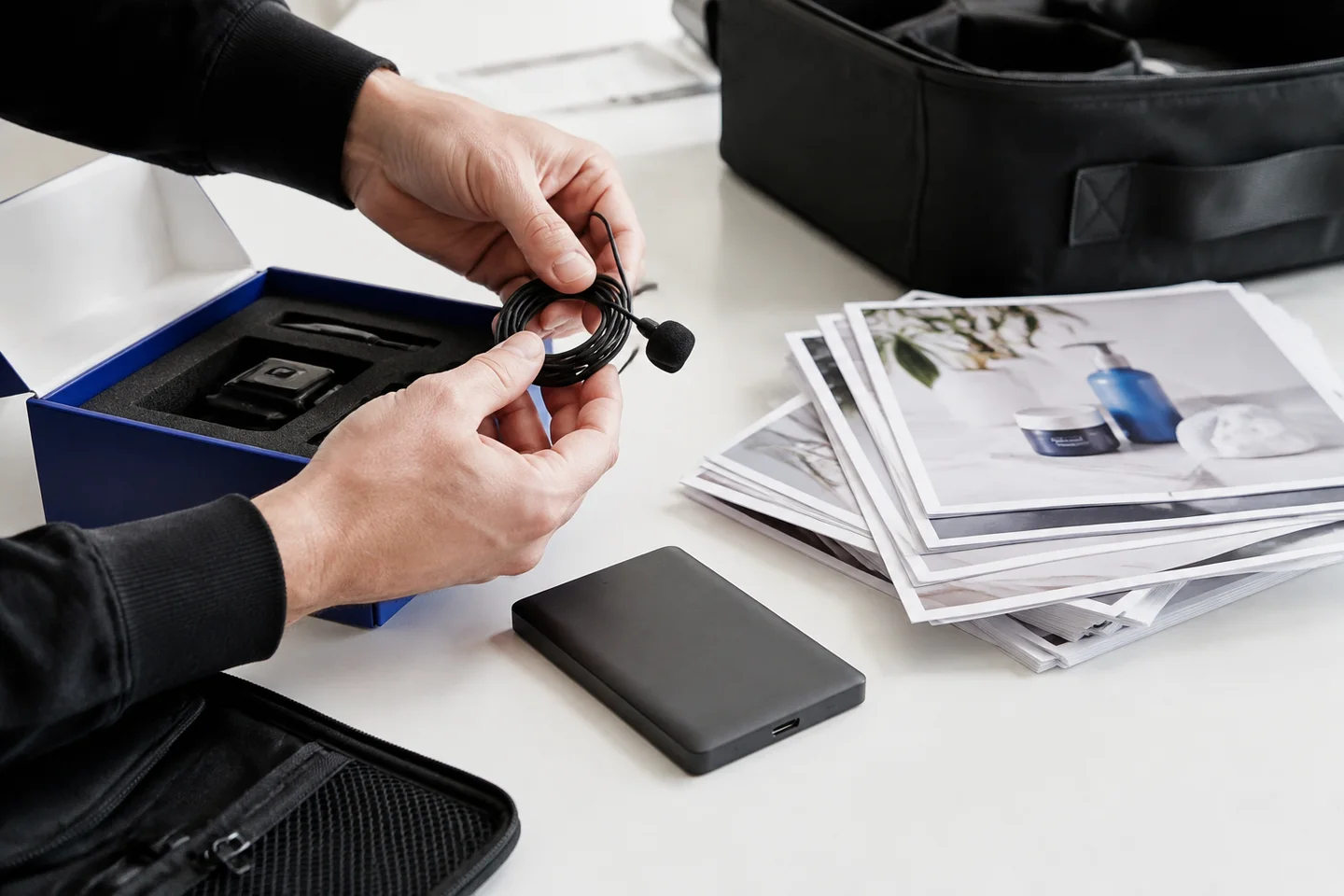
Make the recording easy to review
Use stable framing and enough light to see the relevant detail. Check the lens, background and audio before recording every take. For spoken material, listen back with headphones and on an ordinary phone speaker. Background music should not compete with the explanation, and any music or footage supplied with the deliverable needs appropriate usage permission.
For portrait video, compose a 9:16 master with room for the destination’s interface. Keep labels and important movements away from edges that may be cropped or covered. Record a little clean space before and after the action so the editor has useful handles. This is more flexible than a perfectly timed take that offers no room for a transition.
Review names, numbers and captions against the brief. A captioning error can change a product instruction even when the spoken line is correct. For a screen recording, use sample information and increase interface readability. Do not expose client accounts, notifications, payment information or customer records to make the demonstration appear more convincing.
Build a portfolio that answers a hiring question
Lead with the strongest relevant example, not a long introduction about wanting to become a creator. Put a short description beside each piece: the problem it explains, the format and what you produced. A prospective client should be able to open the page, play the video and understand your capabilities without requesting access to a private folder.
Include a clear contact method and a concise description of your available services. If you offer recording but not editing, say so. If a sample is self-initiated, retain that label. Do not attach invented views, sales or testimonials to make a new portfolio appear established. Production quality can be assessed without pretending that practice work was a successful paid campaign.
Test the page on a phone and while signed out. Check that videos play, text is readable and the contact route works. Ask a person unfamiliar with the project to find the example most relevant to a simple brief. Their difficulty, if any, is a useful navigation problem to fix before sending the page to potential clients.
Quote the scope, not an imaginary industry average
A useful quote describes a finished job: the number of concepts, shoots, hooks, edited versions and revisions, plus the agreed delivery date. Raw footage, extra aspect ratios, rush work and paid-ad usage may change the scope. Ask about them explicitly. A single per-video number hides too much when two briefs require very different work.
Build your internal estimate from preparation, recording, editing, administration and any direct expenses. Include time for the agreed revision process. Then compare that estimate with the offered budget and decide whether the job is workable. Revenue is not take-home income, and a quoted fee does not account for all unpaid business development or operating costs.
For example, a fictional creator might reserve six hours for a small assignment and quote a package based on those hours and the agreed usage. If the brand later requests a second location and new concept, that is a scope discussion, not merely a caption correction. No specific rate in this example is a recommendation or a claim about the 2026 market.
Agree on review and delivery before filming
Ask who can approve the concept and who consolidates feedback. A single clear review process prevents conflicting instructions from several stakeholders. Define what counts as a revision and what would require a reshoot or a new brief. Put the delivery format, due date and expected raw files in writing so neither side discovers a different assumption at handoff.
Discuss the intended channels, usage period and any advertising arrangement with the responsible owner. A production checklist is not a substitute for reviewing the actual agreement. If a request includes broad likeness use, future synthetic editing or unclear exclusivity, pause and get qualified advice appropriate to your situation before accepting it.
Deliver versioned files with readable names. Keep an approved master, destination edits and any agreed source material separate. Include a short handoff note identifying the final version and any important production limitations. Avoid leaving the brand to guess which of several similarly named exports was approved for publication.
For brands: write a brief that can be acted on
Describe the viewer’s situation, the one product benefit to demonstrate and the next step. Supply the actual product facts, restrictions and any required disclaimers. Show references to explain framing or pacing, but ask for original work rather than a copy of someone else’s ad. The creator needs to understand the intended outcome, not merely match a mood board.
Separate mandatory details from creative freedom. For the fictional container, the exact closing mechanism and dimensions may be fixed while the setting and phrasing can vary. Invite the creator to flag an instruction that does not match the physical product. That feedback is valuable; requiring an inaccurate demonstration will not make the final asset stronger.
Review the first concept before investing in a large batch. Confirm that the claim is supportable and the action is visible. A small pilot can reveal an unclear brief, difficult product handling or a missing reference. Use what you learn to improve the next assignment rather than demanding many nearly identical versions of a weak idea.
Find work through relevance, not bulk promises
Identify brands whose products you can genuinely demonstrate and whose content leaves a useful question unanswered. Send a concise, specific pitch with one relevant example and a proposed production idea. Do not promise viral reach or sales you cannot control. The aim is to make the next conversation concrete: what would be made, for whom and why.
Referrals and creator marketplaces can also help a brand discover work, but each has its own terms and selection process. Check payment, usage and communication arrangements before committing. Keep a simple record of conversations, agreed scope and deadlines. Follow up professionally without turning a lack of response into a reason to send repeated unsolicited messages.
After delivery, ask whether the work met the brief and which part of the process could improve. Seek permission before adding commissioned work to your public portfolio. If the brand shares performance information, retain its definition and context rather than turning one campaign result into a general guarantee for future clients.
Use AI assistance without misrepresenting the work
AI tools can support ideation, organization or illustrative creative. They do not make a fictional experience a customer testimonial. The FTC’s guidance discusses false underlying testimonials and disclosure of material connections; platform rules add their own requirements for synthetic media. Treat those checks as part of production, with the appropriate owner reviewing uncertain cases.
Postraid can support product-context reactions, memes and carousels. It is not presented here as a service that hires you, guarantees creator earnings or includes a custom voice and likeness clone. A brand may use a reaction to communicate an everyday frustration and commission recorded footage to show the actual solution. Keep those roles clear in the final message.
The useful comparison is task by task. Film an exact physical action when it matters. Use an explanation or illustrative format when that is enough. Track the time and revisions required for an approved result, and avoid assuming either generated or commissioned material is always superior. Start with a small, honest body of work you can explain and deliver reliably.
A few useful answers.
Can I begin without a following?
Yes, you can build production samples without selling audience reach. Show the work you can actually deliver and describe the scope accurately. An influencer placement is a different service and may require separate audience evidence.
Do I need to appear on camera?
Not for every brief. Hands-only demonstrations, narrated screen recordings and product close-ups can explain a task. Choose a format that shows the relevant evidence rather than hiding an essential part of the product experience.
What should a first sample include?
A recognizable question, a visible action and a clear ending. Label self-initiated work, check the facts and deliver a readable portrait version. A short, understandable demonstration is stronger evidence of skill than an unsupported success claim.
What is a realistic income expectation?
No universal earnings figure follows from the job title. Income depends on accepted assignments, scope, expenses, payment terms and time spent finding work. Estimate a sustainable process from your own costs rather than treating a marketplace listing as a guaranteed salary.
Can I reuse a client video in my portfolio?
Check the agreement and obtain approval for the intended public use. Keep the original commission context and your contribution accurate. Do not publish private material or imply results that the client has not supplied and authorized you to share.